

Flatbed trailers are versatile, open-deck trailers that allow for easy loading of large and irregularly shaped cargo.
Standard flatbed trailers are typically:
- 48 to 53 feet long
- About 8.5 feet wide
- Deck height ranges from 48 to 60 inches
The weight limits for flatbed trailers are largely set by the Federal Bridge Gross Weight Formula, which dictates maximum axle weights based on the distance between axles and total axle count.
Generally, a standard flatbed can carry up to 48,000 pounds, but this weight limit can vary depending on the type and configuration of the flatbed.
The Federal Motor Carrier Safety Administration (FMCSA) and Department of Transportation (DOT) establish these weight limits to ensure that trucks do not exceed safe weight thresholds, which could lead to road damage and increased risk of accidents.
Understanding Flatbed and Axle Configurations
Flatbeds can have multiple axle configurations depending on the load requirements and legal limits. Here are the primary types:
- Single-Axle Flatbeds: These trailers have a single set of wheels and are typically limited to lighter loads, given their reduced capacity for weight distribution.
- Tandem Axle Flatbeds: The most common setup, tandem axle flatbeds have two axles placed close together, offering a stable load base for weights up to 34,000 pounds on the tandem axle set. They’re ideal for many standard loads and offer a good balance of capacity and maneuverability, making them versatile for most shipping needs.
- Spread Axle Flatbeds: These trailers have two axles separated by more than 10 feet, which allows them to handle heavier loads by distributing the weight more effectively. Spread axle trailers are often chosen for bulky, oversized, or exceptionally heavy cargo, as they provide greater stability and minimize road wear by spreading the load across a larger surface area.
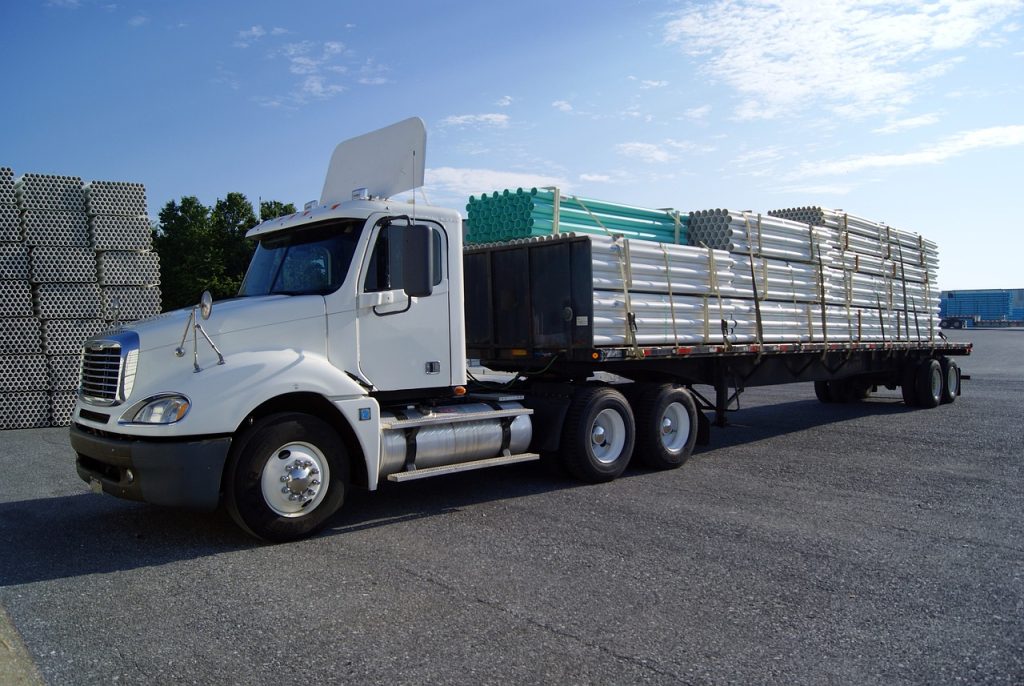
Tandem Axle Flatbed: Weight Capacity and Use
Tandem axle flatbeds, equipped with two axles closely positioned, are a popular choice for shipping companies due to their capacity and versatility. They can handle up to 34,000 pounds on the tandem axle set, with an overall weight limit of about 48,000 pounds for the entire flatbed trailer.
Tandem axle flatbeds are well-suited for most general cargo that does not exceed the standard weight limits, such as lumber, steel pipes, and large construction materials.
The tandem axle setup also provides solid stability and allows for easier handling and cornering, which makes it an ideal choice for regional hauls or loads traveling through urban areas.
Spread Axle Flatbeds: Weight Capacity and Use
Spread axle flatbeds, with axles spread apart at a greater distance, offer a weight capacity advantage by distributing the load more evenly. Each axle can often carry up to 20,000 pounds, allowing the trailer to legally carry up to 40,000 pounds across the spread axle pair, or sometimes more depending on state regulations.
This setup is beneficial when hauling oversized, bulky items like construction machinery, large tanks, or prefabricated building materials that need to be spread over a larger surface to maintain stability and comply with weight regulations.
The spread axle configuration, while beneficial for weight distribution, may require more space for turning and backing, so it’s best suited for routes with minimal tight turns or city driving.
Kingpin to Rear Axle Distance Laws
Kingpin laws regulate the distance between the kingpin (the coupling point at the front of the trailer) and the rearmost axle. This distance is critical for ensuring stability and compliance with state regulations.
This regulation is particularly relevant when crossing state borders, as freight carriers need to adjust their trailer configurations to remain compliant. For example, a trailer legally configured in Nevada might need adjustments when entering California due to the shorter kingpin-to-axle requirements.
Note that these limits can vary within states based on route classifications and vehicle types, so always check the latest state DOT requirements for precise details.
U.S. State KPRA Distance Limits
- Alabama: 53 feet on non-Interstate highways
- Alaska: 43 feet (varies based on specific roadway restrictions)
- Arizona: 40 feet on state highways
- Arkansas: No specific limit; federal bridge formula applies
- California: 40 feet on many state roads (strict in urban areas)
- Colorado: 57 feet on highways
- Connecticut: No specific KPRA limit; total trailer length restrictions may apply
- Delaware: 41 feet on highways
- Florida: 41 feet on most roads
- Georgia: 41 feet for trailers over 48 feet
- Hawaii: 42 feet
- Idaho: 40 feet on state highways
- Illinois: 45 feet on most roads
- Indiana: No state limit; total length and bridge formula apply
- Iowa: No specific limit; state road length restrictions apply
- Kansas: 37 feet on state highways
- Kentucky: 41 feet for trailers over 48 feet
- Louisiana: No specific KPRA limit; bridge formula and length rules apply
- Maine: No specific KPRA limit; total trailer length limits apply
- Maryland: 41 feet on all roads
- Massachusetts: 41 feet for trailers over 48 feet
- Michigan: 37 feet for trailers on highways
- Minnesota: 43 feet (varies based on local road restrictions)
- Mississippi: 41 feet on most roads
- Missouri: No specific KPRA limit; length restrictions based on trailer size
- Montana: 43 feet on highways
- Nebraska: 40 feet on state roads
- Nevada: 40 feet (rural highways); 53 feet allowed on other routes
- New Hampshire: No specific KPRA limit; overall length restrictions apply
- New Jersey: 41 feet on highways
- New Mexico: 40 feet on state highways
- New York: 41 feet on most roads
- North Carolina: 41 feet for trailers over 48 feet
- North Dakota: 43 feet on highways
- Ohio: 41 feet on highways
- Oklahoma: No specific KPRA limit; length restrictions apply to trailers
- Oregon: 40 feet on highways
- Pennsylvania: 41 feet on state roads
- Rhode Island: No specific KPRA limit; overall length restrictions apply
- South Carolina: 41 feet on highways
- South Dakota: 43 feet on highways
- Tennessee: 41 feet on most roads
- Texas: 41 feet (strict enforcement in cities)
- Utah: 45 feet (route-dependent)
- Vermont: 41 feet on state roads
- Virginia: 41 feet on most highways
- Washington: 40 feet on highways
- West Virginia: No specific KPRA limit; bridge formula and length apply
- Wisconsin: 43 feet on state highways
- Wyoming: 43 feet on state highways
Overweight or improperly loaded trailers can cause significant damage to public roadways, leading to increased repair costs and road hazards.
Non-compliance can result in fines, delays, or vehicle impoundment, all of which impact freight company efficiency and reputation.
Additionally, overloading a trailer or improperly distributing weight across axles can lead to dangerous situations, increasing the risk of accidents due to instability or brake failure.
Following weight limits and axle regulations not only keeps the roads safer but also ensures a smooth and uninterrupted freight journey.
Are you a freight broker? We can help you get new shipper leads with active loads…


